



March 20, 2026
“I Love You When You Lie”—A New Poem from Gaza
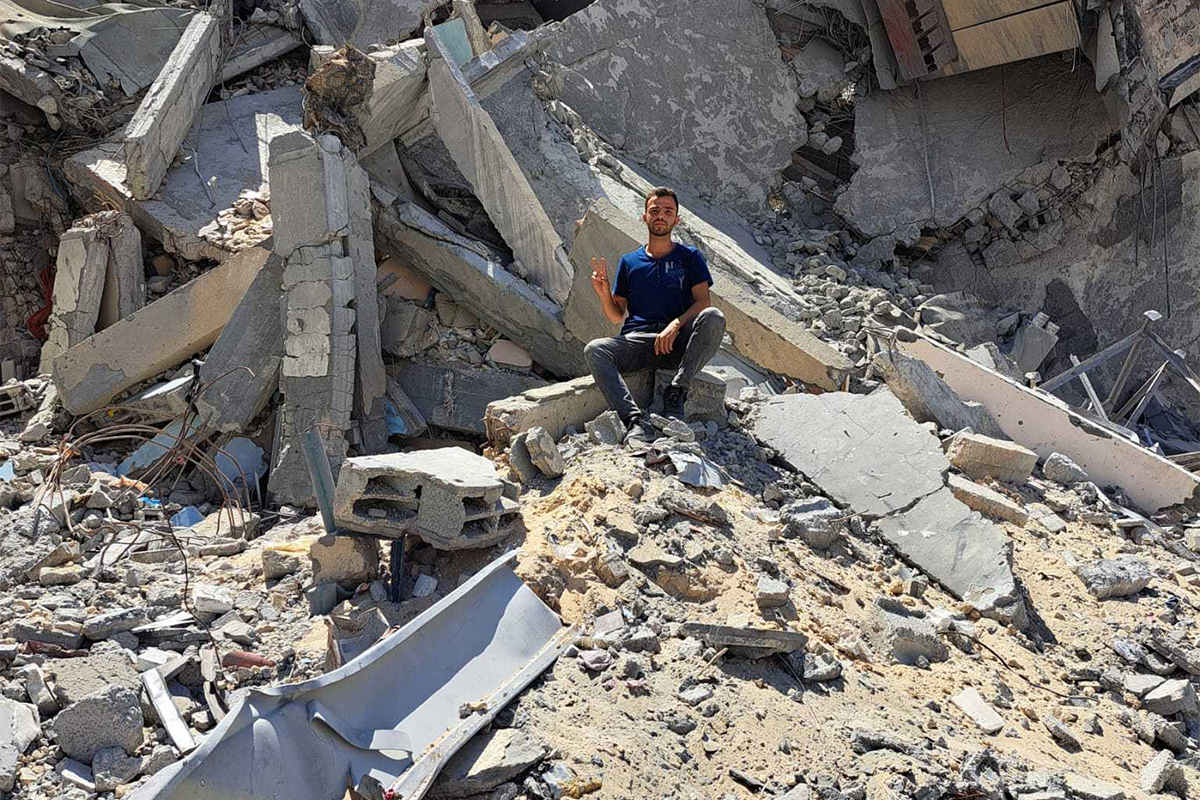
In this intimate epistolary litany, Ibrahim Badra bears witness to the embodied and psychic parallels between the ongoing genocides in Palestine and Sudan. With fierce and tender solidarity he writes, “I know you, my Sudanese brother,” and reflects on shared experiences of navigating manufactured famines, weaponized poverty, and the psychological dimension of surviving genocide while the world appears content to turn away. In reading this moving tribute of Sudanese-Palestinian solidarity, we should remember that Ibrahim, at age 24, is a survivor of seven wars and one genocide. I had the honor of befriending Ibrahim during the early months of the genocide, when he risked his life daily in order to share the reality of Gaza with the world via writings and videos posted to social media. During this time, we began an ongoing exchange about the interconnected freedom struggles of Palestine and Sudan. While Ibrahim was forced into exile, his family remains in Gaza. Readers are encouraged to support their continued survival through monthly donations.
—Umniya Najaer, Mizna author
“I did not come to save anyone.
I came to stand close enough
so the truth could not pretend
it did not see us.”
—Ibrahim Badra
“I Love You When You Lie”
by Ibrahim Badra
I’m a Gazan, but I know how the Sudanese live now,
I lived this before, under a different name and in a different place.
Different flags,
the same delay.
Different uniforms,
the same permission to kill.
I recognized the pattern
before I recognized the place.
History repeating itself
with new borders
and the same silence.
I know the taste of his breakfast this morning.
I know the calculations he makes to survive until the afternoon.
I know how a Sudanese learns cunning
not to deceive but to pass through.
How he slips past the Janjaweed
to reach El Fasher
with wheat and grain in his hands.
I also passed through death,
carrying nothing but words,
trying to enter one more day.
Words were not enough,
but they were all I had.
So I carried them carefully
like water
through checkpoints of fear.
I learned to write
so nothing would vanish quietly,
so death would have to pass
through language
before it passed through us.
I paused to count the shadows between the tents
to see how long hope could hide
before the next sunrise.
I learned that waiting
is not empty time
but a slow training
in how not to disappear.
That days do not pass,
they circle you,
testing how much of yourself
you can leave behind
and still be counted alive.
I know you, Sudanese brother,
because before you
I ate animal feed,
carried loads that were not mine,
and turned for years
like an ox
on the wheel of Gaza.
A place that never stops circling
hunger,
fear,
endless waiting.
I know what is in your back pocket,
even if it holds only air.
I counted the same few coins
and measured how many days
they could buy.
I smelled the dust that morning,
felt it settle in my throat,
and knew the day would demand
more than it offered.
I looked at the queues,
the tents,
the ruins,
and learned that poverty
is not empty pockets
but death moving ahead of you
while you are still trying
to survive and escape,
not because you are stronger,
but because your turn
has not reached you yet.
I know you, child of sand and salt water,
because the sea there
is like the sea here.
The same salt in the mouth.
The same dust in the lungs.
When you move food
past your heart
before your mouth.
When you fill your nights with stars
and your days with bodies.
When you measure distance
not by maps,
but by the sound of shelling and explosions
and by the number of times
you survived.
I rest my hands on the earth,
remembering how it used to feel
soft under my fingers.
I did not come to save anyone.
I came to stand close enough
so the truth could not pretend
it did not see us.
I love you when you lie.
When you point at the smoke
and say it is just a passing cloud.
I did the same,
so I would not sleep
with the full weight of truth
on my chest.
I love you when you say
the explosion is the noise
of a distant celebration,
because sometimes
we need this lie
to keep walking.
I love you when you steal.
all the stars from the night
so you do not lose the road.
I stole light from darkness
and language from silence.
And I wrote.
Not to explain pain,
but to bear witness.

Ibrahim Badra is a journalist, translator, writer, and human rights activist from Gaza. He is twenty-four years old and has survived seven wars and the ongoing genocide in Gaza. Badra was born in the Sabra neighborhood of Gaza City decades after his family was displaced from Jaffa in 1948. He holds a degree in English Literature and translation from the Islamic University of Gaza. His work focuses on documenting lived realities, amplifying Palestinian voices, and advocating for human rights in the face of conflict and displacement. His interests include writing, literature, and translation and are always driven by a commitment to bear witness and share stories of survival and resilience.
Related
The Bringers of Violence
New Habits
Suture Fragmentations—A Note on Return
Favorite SWANA Books of 2025: Reflections on Literary Abundance from Mizna Community + Staff