



November 18, 2026
Decomposing Zionism and Dismantling the Jewish State: an Excerpt from What Now
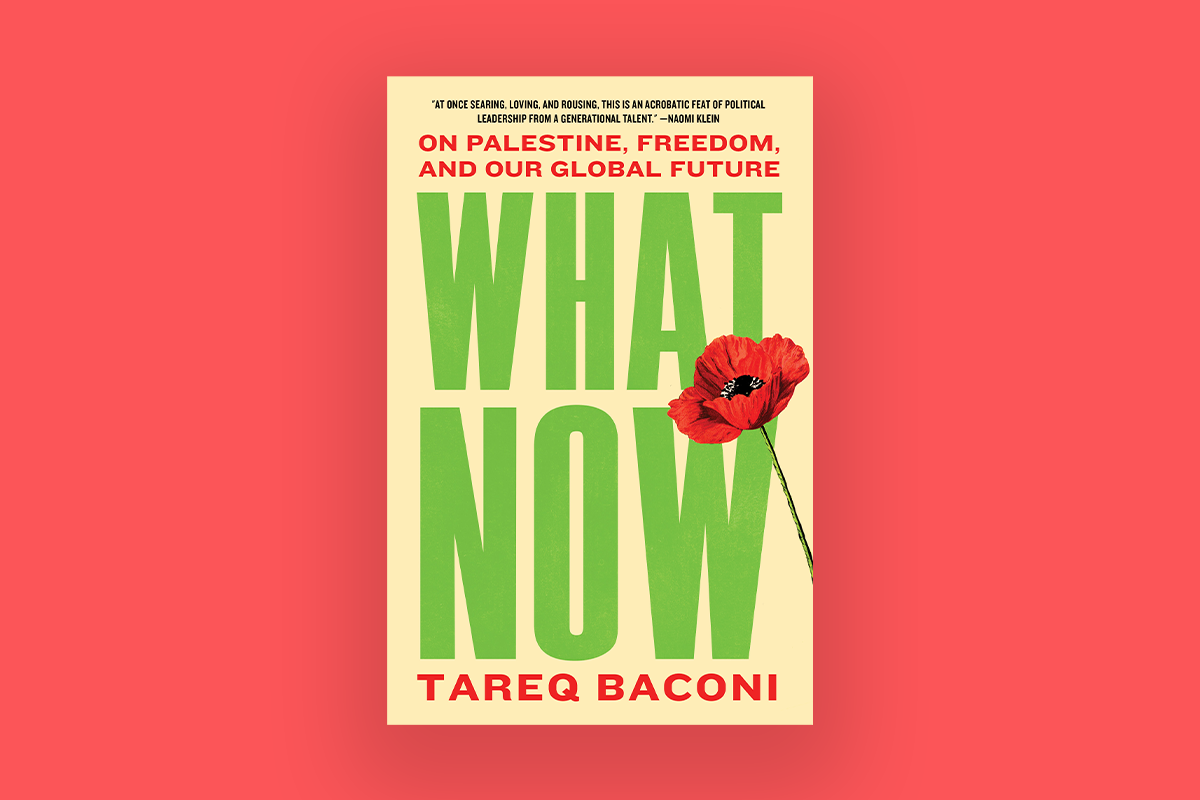
History has long shown us that an organized people, in the grand scheme of things, will triumph over even the most brutal empires and oppressive regimes. This is a fact so many of us in the Palestinian liberation struggle have kept close to our chests, resisting this escalating US-Zionist genocide by any means necessary so as to affirm our faith in our people and our just and moral cause. But crucial to this line of thinking, as Tareq Baconi’s urgent interventions remind us, is strategy: a critical site whereby Zionist and US imperial politics have intervened to further divide and fragment our political will, forcing us into crises manufactured on their terms that distract from our ultimate goal of liberation. The usefulness in Baconi’s What Now is its capacious strategic thinking that, at once, rises to the urgency of this devastating moment, while also concisely grounding us in the long history of our struggle and, with militant clarity, constellating our struggles to larger systems of racial capital, hetero-patriarchy, and planetary devastation. As a long admirer of Baconi’s work, from his principled scholarship to his devastating queer coming-of-age memoir that speaks so unapologetically and generously to our collectives, I cannot help but read What Now as the strategy-oriented expansion of Fire in Every Direction’s ending, a continuity of breath and spirit embodied into a different form of political intervention.
This is a book that skillfully and accessibly speaks to audiences, both within and beyond our Palestinian identity politic, on unapologetically anti-colonial Indigenous terms. In a publishing and academic landscape whose gatekeepers pressure allies to turn their hot takes on our genocide into books that, however well-intentioned, replace and materially profit from the ongoing epistemicide waged against Palestinians im/materially, here is a truly useful intervention that cuts through the imperially-manufactured noise to unite us in strategy, across our colonially fragmented body politic. To build his argument, and address the urgent “what now” question for our movements, Baconi articulates three core strategic principals. First, we must avoid the trap of partition: self-identified “solutions” that fail to address the core foundational colonialism of Zionism, which have plagued and defanged our political institutions (see Mohammed Bamyeh’s work on the no-state solution for further reading). Second, and very critically for Palestinian readers, we must deepen and expand our national consciousness to form a truly unified struggle on several tactical fronts. Mizna now presents an excerpt from Baconi’s chapter on his third strategic principal: toward the decomposition of Zionism and dismantling of Jewish supremacy.
—George Abraham, Editor-at-Large
If confronting Zionism entails going to the heart of Western civilization and its self-conception, then asking these questions has the power not only to liberate Palestine but to transform society globally. That is why the genocide in Gaza is rocking every house and institution all over the world. Its reverberations are irrefutable.
—Tareq Baconi
Decomposing Zionism and Dismantling the Jewish State
What of this state that has appeared out of thin air and fashioned itself on our land? What of the people who have settled here, claiming Palestine as their own—busying themselves with archaeological digs to prove that this land is Jewish, that the presence of Jews in these hills goes back millennia? One does not know whom these assertions are meant to impress. Where are those individuals who deny that there has long been Jewish presence in Palestine? Jews have flourished here, as compatriots and neighbors, for centuries. These lands are holy for Jews wherever they might live, as they are for Muslims and Christians. What we are contesting is not—and has never been—Jewish presence in Palestine or Jewish connection to the land. What we are fighting, rather, is the claim to Jewish exclusivity and ethnonationalism; that these lands are theirs and theirs alone, that Jews whose parents and grandparents and great-grandparents had never stepped foot here beyond some pilgrimage to this shrine or that temple have the right to settle it, dominate it, and exclude non-Jews from their polity. What we are fighting is the supremacy underpinning these colonial claims, the rapaciousness with which these lands are gobbled up in service of some biblical tract or nostalgic hymn.
Settlers elsewhere manipulated religious texts to justify theft and murder. That our settlers are Jewish does not make them exceptional. It does mean, however, that our struggle will have to deal with the particularities of their narrative, just as other struggles have had to deal with the specificities of those colonial narratives imposed on them. For this is what we’re fighting: a colonial narrative that manipulates theology to dominate.
This genocide is the culmination of a colonial fantasy that formed more than a century ago, when a Viennese man conjured the idea of a Jewish state in Palestine, a place he had never visited. Zionism, the ideology he pioneered, and which animates this regime, has evolved since and today models twenty-first-century settler colonialism. Fundamentally, it is an ideology of belonging; the settler wishes more than anything to belong and, having turned to the divine, believes that Palestine is where this wish is fulfilled. Whether religious or secular, they cannot understand why the native does not see the enormity of this right, this chosenness of their people to reside here. The settler’s relationship with the native is therefore embattled, shifting between desire for acceptance and desire to annihilate, always fantasizing about the native’s violent refusal so as to justify their own power.
The settler is animated by suspicion, fear, and messianic zeal. They live in a rigid mental model that is committed to a zero-sum game, where their survival can only be secured by the annihilation of the other. Where Palestinians have a double consciousness, existing within and beyond the dominant paradigm imposed on them, Zionists are embedded in false consciousness, a hegemonic paradigm of their own making. This manifests in entitlement, arrogance, a manipulation of history, and an internalization of their right to privilege. The air they breathe tells them they are not perpetrators and colonialists, but victims and natives. This is the only way they know how to live, making them fragile and brittle. Anything that challenges this belief is blocked out. Israeli Jews simply refuse to see or acknowledge facts; instead, reality is rewritten. They have manufactured an unknowing of the world they themselves have created. Some settlers gain awareness, yet few use this knowledge to challenge the reality they inhabit. Whether fascist or liberal, Israelis are actively complicit in sustaining their apartheid and annihilating Palestinian life forms.
Underneath this unknowing is a fundamental insecurity that lies at the heart of the settler psyche, an intuition that they are thieves and, therefore, that the native has a right to resistance and vengeance. They fear that the native will do unto them what they are doing unto the native. In the primary dynamic of the settler, the psychic fears they create, this threat of besiegement, locks them in a constant trap of victimization. They are surrounded by barbarians, terrorists, savages—for only when threatened by beasts can one become a warrior. In Palestine, this settler insecurity is further reinforced by generations of persecution of the Jewish people; a persecution that was leveraged into an ideology of entitlement and supremacy by Zionists. It is shaped, also, by centuries-old Islamophobia and European fears of Muslim invasions. The Israeli Jewish narrative produces the figure of the terrorist precisely to induce terror within the self. To justify why they must imprison themselves in a militarized fortress and send their children to die in the army. This victimhood is part of how many Zionist Jews define their peoplehood as a national/ethnonational collective. Where victimhood is lacking, it must be manufactured. This internal oppression is devastating to their humanity—which is why Zionists, like many white people, are unprepared intellectually or emotionally to hear about their privilege, and their investment in structures of exploitation and domination. They are scared that such a confrontation would shatter their world of make-believe, the lies of their lives.
We were colonized, first and foremost, by European Jews who, animated by nationalist fervor in the nineteenth century, and facing pervasive anti-Semitism, imagined for themselves an ethnonational state beyond Europe. By the mid-twentieth century, many of those Jews fled their homes because of Western anti-Semitism, a racism so vile it culminated in one of the most horrifying genocides in the history of humanity. In the face of European hatred of Jews, Zionism became an escape plan, one that avoided confronting European prejudice, but rather internalized European anti-Semitism and, paradoxically, the sense of entitlement and superiority that is at the heart of European colonialism. This was a choice that Zionists made; anti-Zionist Jews facing the same persecution leveraged their fears and traumas into humanist and internationalist values and saw the Zionist invitation to take Jews to Palestine as an affirmation of European anti-Semitism, that Jews do not belong in Europe. Anti-Zionist Jews argued, rather, that Jews must remain in Europe and confront prejudice in their homelands. Zionism, the ideology which emerged victorious from this contestation, ravished not only Palestine, but our entire region, expelling refugees throughout to devastating effect and pulling Arab Jews out of their countries and homes and into the folds of Zionist colonization in Palestine. The racist harm of Zionist state-building against Palestinians was reproduced in an entirely different way and on a non-analogous scale on the psyches, bodies, histories, and cultural forms of Arab and African Jews, primarily by “de-Arabization” and Israelification.
Zionism is a vehicle through which the trauma of European anti-Semitism, culminating in the Holocaust, is co-opted, manipulated, and externalized onto Palestinians—the victim turned torturer. The Zionist has pursued a path of extreme sadism and cruelty, which means that Palestinians face a most ruthless adversary. Israeli Jews are not only terrified that they are surrounded by terrorist hordes; they are terrified at the thought of being surrounded by anti-Semites as well. Knowingly or otherwise, Israelis are (re)enacting what European racism, culminating in Nazism, did to the Jewish people, and what they believe Palestinians would do as well, given the chance. The very nightmares keeping settlers awake at night, rooted as they are in European racism, are exported onto the bodies of Palestinians, their grief deposited within us as fodder for their supremacist beliefs.
The myth we are told is powerful: Jews returning to their biblical lands for redemption, Western powers repenting by supporting them to secure a place where they can finally find safety. But these early colonizers in search of a mythic safety were primarily Europeans, and hence inheritors of a colonial history and mindset. Out of this history a Jewish nationalism was crafted, and the design to seize Palestine as a homeland for Jews was originated. That our colonizers are Jews (or that many of the current Israeli Jewish population is Arab) does nothing to negate this European identity or colonial mindset. The narrative surrounding this settler colony elides important questions, paramount among them: Why would safety for Jews have required their departure from their European homes and cities in the first place? Why were ideologies that allowed Jews to make homes for themselves, in the cities where they lived, actively opposed and ultimately defeated?
Israel is sustained by a mixture, past and present, of Western anti-Semitism and philosemitism, which is to say, of the West’s obsession with the Jewish question. European anti-Semitism, then, is also the basis of our past and ongoing colonization. European fascism is the domestic manifestation of mechanics of extermination and colonization that European powers refined in the colonies. After Nazism, Western powers dealt with anti-Semitism as the crimes of wayward individuals instead of as an ideology endemic to European and Western powers, an ideology of racism that, through colonization and genocide, devastated the world, not only European Jewry, with its commitment to white supremacy and European entitlement. Western powers have not sufficiently grappled with, nor atoned for, this history—the cornerstone of which is upholding the Holocaust as an exceptional genocide; it is baked into the institutions of our global order and continues to shape Western politics. The proclaimed Jewishness of this settler colony has embroiled Palestinians in the bloody and complex history of Judeo-Christian civilization and its ongoing expression in Western colonialism and empire.1
Instead of absolution and accountability for European anti-Semitism, that past paved the way for legitimating the colonization of Palestine; racism and anti-Semitism, colonialism and genocide, were exported out of Europe and institutionalized into the settler colony created to whitewash Western guilt. This turned anti-Semitism from a European problem into an Arab one, with Palestinians, as well as Arab and African Jews, as the collateral damage. As if a Jewish state in Palestine can absolve the West of having to reckon with its past and present racism, its legacies of genocide, colonialism, and empire.
To free Palestine is to undo the supremacist beliefs at the heart of Western hegemony. Western anti-Semitism has placed Israel in a state of exception. Israeli Jews—those enjoying full sovereign and national control in the form of a nuclear-armed state—are both fragile victims of persecution and wonder children, the inhabitants of a state that can do no wrong, even as it perpetrates a genocide that is streamed to people around the world in real time. In seeking absolution, states such as Germany have once again accepted Palestinians as collateral, their oppression and colonization a fair price to pay to allow Germany to pretend to atone for its past crimes lest the state be aggrieved and old traumas reignited. To allow these states, also, to push forward their own domestic authoritarian policies under the guise of fighting anti-Semitism, which is then held apart as an ever-present danger. All voices speaking about Palestinian liberation or celebrating Palestinian lives must be silenced, even if those voices are themselves Jewish.
Only once the West contends with its own racism, against Jews and others, can this chapter of colonial rule and domination come to an end. The salve for the guilt over the victimization of Jews will not come from Palestinian lands but from Europe, where the perpetrators of genocide and colonization emerged and continue to emerge. Israel and its feckless Western counterparts have weaponized the legacy of the Holocaust in the most obscene ways, through narrative and through the very material structure of Jewish domination and apartheid in colonized Palestine. Yad Vashem, the epitome of Holocaust remembrance, literally straddles the ruins of the village of Deir Yassin.
What a burden to put on Palestinians. We have been the recipients of Western projections from the days of Balfour, when Palestinians were stripped of any political character, our sole purpose being to get out of the way as our lands were taken to create a Jewish state and rid the West of their Jewry. What does it mean that we, Palestinians, are the people onto whom the West’s guilt at perpetrating a genocide of Jews is projected, and onto whom the psychic pain of their victims is directed? Jewish Israelis are a wounded people, and this genocide—in its sadism and brutality—can only have originated from a place of deep horror, the culmination of centuries of fear and persecution that are actively being co-opted to justify notions of entitlement and superiority. If confronting Zionism entails going to the heart of Western civilization and its self-conception, then asking these questions has the power not only to liberate Palestine, but to transform society globally. That is why the genocide in Gaza is rocking every house and institution all over the world. Its reverberations are irrefutable. The answer to how we can achieve a global future of equality, based on real—not selective or symbolic—confrontation with the legacies of colonialism and racism, goes straight through Jerusalem.
The power of our colonial masters and the ongoing conversation around anti-Semitism in the West are imbricated. The legacy of the Holocaust is alive because of the politics of the present; its history, its impact, its memory, are all still being debated. After 2023, the world will remember the Holocaust differently because of Israel’s genocide in Gaza. The “never again” has morphed from a solemn declaration of the sanctity of human life to a rallying call to wage genocide with impunity. “Never again” has come to reinforce Jewish exceptionalism; only Jews must not be killed. The legacy of the Holocaust is alive and continually evolving.
It is precisely the mutability of this legacy that makes space to imagine a Free Palestine in the future. Because of the genocide of Palestinians, the West has to finally grapple with its own hidden and overt anti-Semitism, whether obscured behind philosemitism or not. From anti-Semitic Christian Zionists to anti-Semitic white supremacists, Western powers must understand that exporting their history onto Palestinians has merely aggravated their own domestic racism, against Jews or otherwise. This is not a Palestinian responsibility, but it is one that the Palestinian struggle for liberation can presage. It might be unthinkable in the West today to envision the end of the Jewish state. But as the memory of the Holocaust evolves, room opens for a different historical narrative and contemporary political reality. As soon as the end of the Jewish state is secured—and it will be secured—a Free Palestine will be seen as normal. The inherent contradictions that it had long embodied will suddenly come to be seen as glaring omissions. What was unthinkable will become obvious, what was always meant to be, in the flash of an eye.
Excerpt from What Now, Copyright © 2026 by Tareq Baconi published by Washington Square Press, a division of Simon & Schuster, Inc. Republished with permission of the author and press.

Tareq Baconi is a Palestinian writer, scholar, and activist. He is the grandson of refugees from Jerusalem and Haifa and grew up between Amman and Beirut. His work has appeared in, among others, The New York Times and The Baffler, and he contributes essays to The New York Review of Books and The London Review of Books. He has also written for film; his award-winning BFI short One Like Him, a queer love story set in Jordan, screened in over thirty festivals. He is the author of Hamas Contained: A History of Palestinian Resistance, which was shortlisted for the Palestine Book Award, and Fire in Every Direction.
- “Judeo-Christian civilization” is a white Christian invention of the nineteenth century and not a Jewish one, even though it serves Zionism by assimilating Jewishness into the theological claims of an imperial, supremacist ideology. ↩︎
Related
The Bringers of Violence
2023 Annual Report
Mizna: The Palestine Issue
Poetry Leaders from Across the U. S. to Gather in Florida to Mark Dramatic Growth in Readers and Historic Philanthropic Gifts