



May 19, 2026
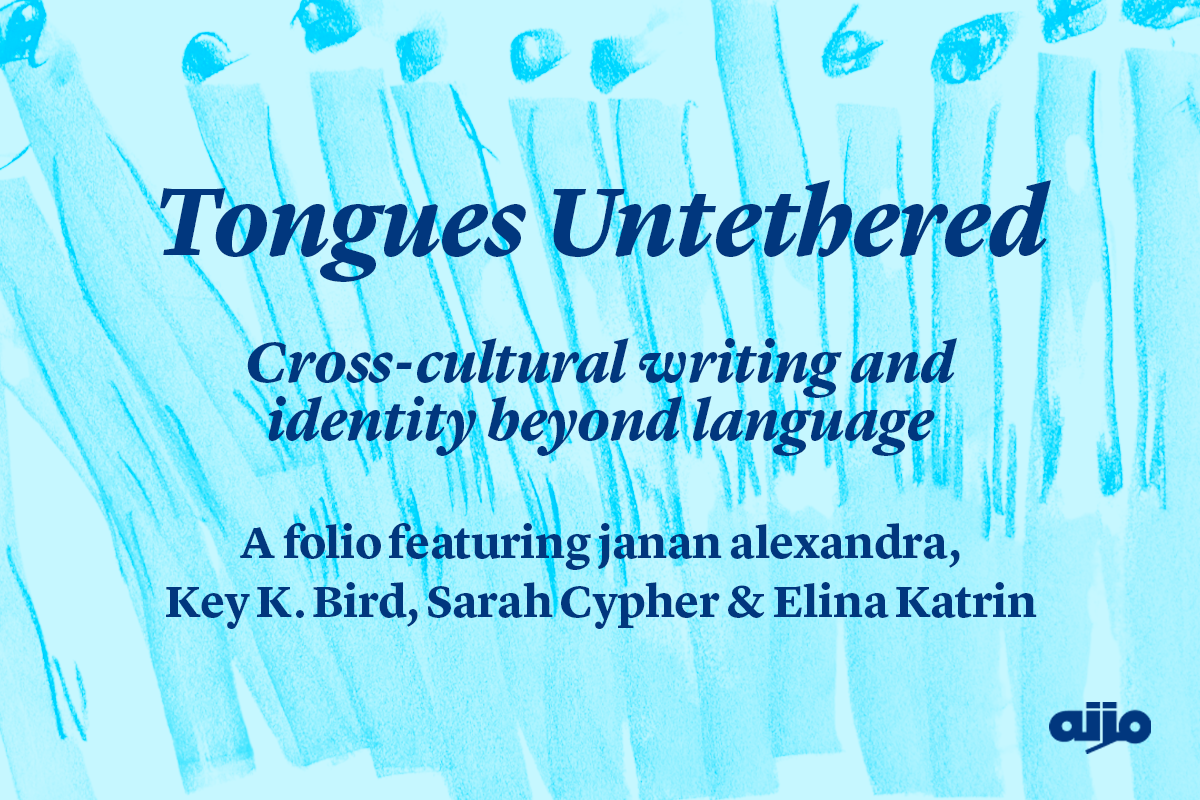
Tongues Untethered: Cross-Cultural Writing and Identity Beyond Language
We exist within an indispensable asset—language. Sooner or later though, writers who belong to multiple tongues, cultures, and heritages come across a curiosity: how to break away from English and honor our ancestry through the plurality language asks of us. What impulses to follow, what assumptions to resist, and how to stay true to our individual experiences while acknowledging the plethora of relationships others have with our shared first, second, third languages and beyond?
Succumbing to Western expectations of who has the right to incorporate languages other than English into their work, many craft-centered events and resources approach multilingual writing from the perspective of fluency, negotiating the evergreen stylistic choices: when to italicize, transliterate, or translate; when to let languages remain untouched so that they may thrive on their own terms.
A year ago, janan alexandra, Key K. Bird, Sarah Cypher, and I gathered as part of MassPoetry’s Bridging the Gap virtual programming series to deepen these considerations and address the less-talked-about experience: incorporating ancestral languages, with which we have troubled, nonlinear relationships, into our writing. We wanted to investigate if the in/ability to speak one’s mother tongue is a failure, an opportunity, or both—simply the reality for diaspora writers.
Sharing insights from our own cross-genre writing practice, we expanded on the un/translatable and il/legible, negotiating how writing in English affects our claims to ethnic communities, where many presume that belonging depends on understanding the language. The conversation led us to explore how play and abundance grow from loss and grief; how fragmentation allows us to approach parables, myths, and fables with the freedom necessary to draw surprising interpretations, stitching a patchwork of dialects and languages that refuses the imposition of wholeness. Ultimately, we had a mutual desire to keep the conversation going, which inevitably led to this digital folio.
Exploring the relationships between form and content, between languages known and felt, we now offer you examples of fiction and poetry that further illustrate how genre influences our abilities to experiment and approach language from different angles, emotional registers, and literary capacities. Whether examining the visual and sonic elements of poems such as “Learning to Write in Arabic” and “On the Other End of Translation” or diving into the inheritance narrative of novel excerpts “Postmortem” and “Wahmi,” we hope you join us on this journey of linguistic and cultural reclamation. In the video recording of the panel, which we encourage you to listen to or watch below, we also touch on these questions through the lens of creative nonfiction: the different versions of self we as multicultural writers can channel within the essay medium.
Prepared or not, language finds us. Even laying out pieces for this folio, I was learning new skills on how to present and situate English and Arabic words. In our daily life and in our writing and reading practice, knowingly or not, we constantly add texture to words. We situate them within a digital or physical space, in conversation with other words and words of others, within the same language or different tongues. Coexisting among this amplitude of experience, the best we can often do is simply listen.
—Elina Katrin, folio curator

“Come From,” “Learning to Write in Arabic,” and “Arabic Abecedarian” by janan alexandra
Excerpted from the book of poetry come from.

“Wahmi” by Key K. Bird
Excerpted from the novel Conjoined States.

“Postmortem” by Sarah Cypher
Excerpted from the novel The Skin and Its Girl.

“On the Other End of Translation” and “On Sunday Night I am Tired of Proving I Deserve Languages” by Elina Katrin
Excerpted from the poetry chapbook If My House Has a Voice.
Related
The Bringers of Violence

Q&A with Empty Metal’s Adam Khalil
30 NEW SWANA BOOKS TO READ IN 2026
Library Journal Review of the Mizna Journal