



May 19, 2026
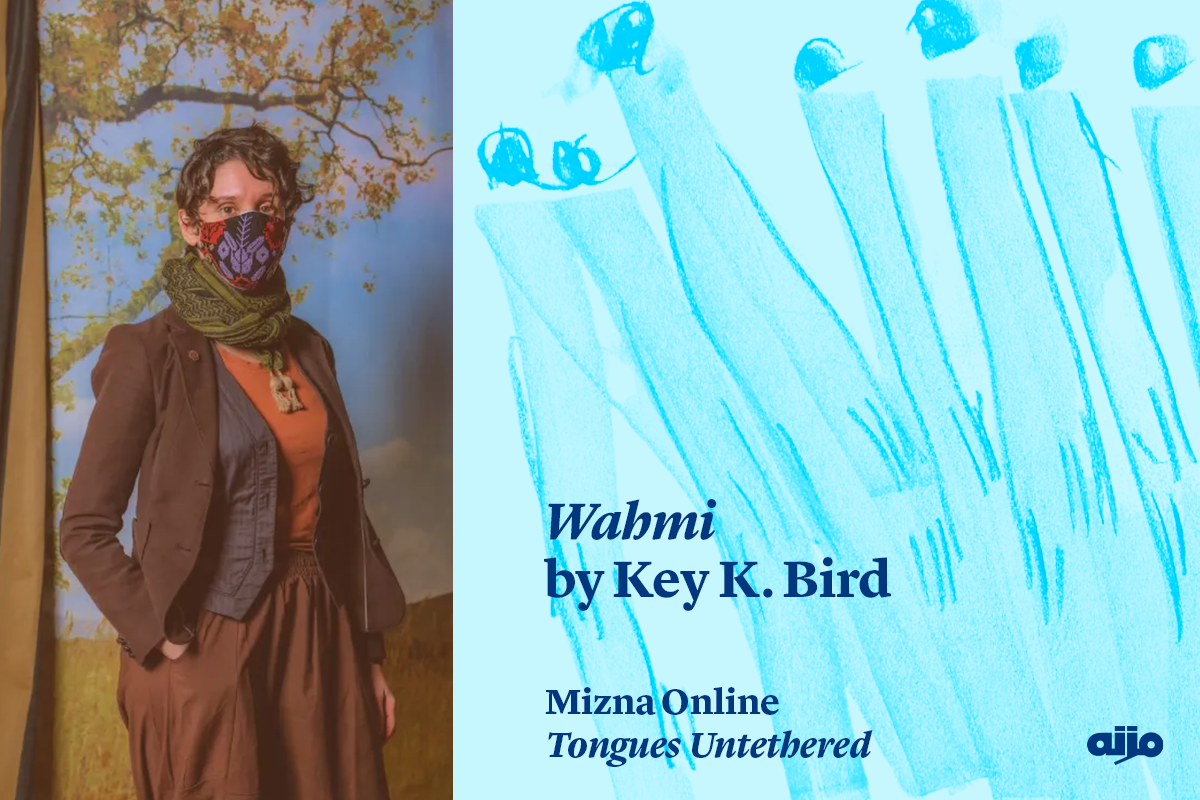
Wahmi—An Excerpt from Conjoined States
Although I’m not fluent in Arabic, I was raised hearing it intermingled with English intermittently at home. One of my sittoo’s cousins punctuated almost all their conversations with “wallah” (as if nothing was ever to be believed without a verbal oath), and my sittoo often code-switched to full Arabic to use profanity (though she swore just as profusely in English). I didn’t know how deeply cultural my family’s usage was, the oaths and the swearing alike, until I started to read fiction by Arab writers. The opening of Randa Jarrar’s novel A Map of Home comes to mind: the vulgar vernacular of Nidali’s mother’s anger is immediately recognizable to me. Or the silver-tongued Nuha Rummani in Sarah Cypher’s novel The Skin and Its Girl—she uses colloquial Arabic to punctuate her English as she renders wonders alongside horrors, creating new paths for joy by way of Arabynglish in the diaspora.
That inventive, familial relationship with language is part of this excerpt from my in-progress novel, Conjoined States. Rahmi’s given name and surname combine the names of my great-great grandmother (Naifeh) and her husband’s mother (Rahmi). She attends a predominantly white school, so she experiences an educational disconnection from Arabic, which surfaces through her limited understanding of the word وَهْمِيّ (wahmi). As Wahmi the hacker, she embodies the imagined, illusory sense of وَهْمِيّ . By renaming herself, she controls when she’s visible and when she isn’t: a survival tactic in a surveillance state. In that sense, Rahmi uses Arabic to rewrite the narrative of who she is. But another definition of the word forces Rahmi to wonder whether her usage is enough to help her escape the material consequences of being perceived as dangerous by law agencies. It’s as if the state’s view of W/wahmi is the only one that exists. Of course, there’s a real-life application of this practice. U.S. powers so often mistranslate Arabic words to misrepresent Arab-led activism and to arrest, detain, and vilify Arabs and Arab Americans. But the history and multiplicity of the language is undeniable—as seen in Rahmi’s parents’ exchange toward the end—so, even as Rahmi endures this self-estrangement, her use of Arabic to reinvent herself and challenge the state-sanctioned powers that displace the masses is, instead, a type of self-regard.
—Key K. Bird
The following excerpt is part of the Mizna Online digital curation, Tongues Untethered: Cross-Cultural Writing and Identity Beyond Language. We encourage you to read this piece alongside other works in the folio.
Wahmi
Mirages are the perfect tool to counter knowledge brokers. Appearing online like a charm at the moment Know Bros needed a lead, mirages offered everything data chasers prayed for on their knees at night: insider intel, state secrets, and reasonably reliable rumors. Mirages promised the impossible, distracted Know Bros by feeding and misleading, granting them their most selfish wish: all the data they could ever ask for. Flooding data warehouses with invalid, outdated details, the agents behind the mirage used the storm to hide their tracks while they searched the brokerage for high-end assets: the names of investors who avoided paying taxes in one state by buying property in another, real estate developers who built state prisons that charged a nightly rate, and donors who bankrolled junior police academies in exchange for easy tax breaks. Once the agents had these winners’ names, they vanished along with the sand. And like real mirages, proving they’d ever existed was a pipe dream. Mirages fit the space where trust rubbed shoulders with belief. That’s why Rahmi Naifeh chose Wahmi as her codename. Close enough to her first name to have its own magnetic pull, wahmi winked at Rahmi like an Arabic abracadabra. Among other things, in Araby, wahmi means mirage.
The name tickled Rahmi, had her dreaming about invisibility cloaks and sandstorms. An edgy vision that gave her control she couldn’t afford in waking life. Unlike most families at her dull public school in sub-suburban New Jersey, the Naifehs couldn’t even swing the cost of a home security system. But Rahmi learned about surveillance cameras and closed-circuit TV channels at school, where she was tested on how data could be encrypted, hidden in one place for one viewer, screened, sacred, saved, safe. Of course, she also studied the eviction predictions, the published lists that followed formal accusations of disloyalty. Being one of a small group of “ethnics” who got lost at her predominantly white high school, Rahmi knew that the odds of her family’s name winding up in the predictions hovered around the same rate as her white classmates making jokes about “terrorism.” So she prayed to the president himself to protect her family from eviction. She practiced the state’s blessings at school and at home, even though her Greek Orthodox parents found state-sanctioned prayers insulting. Watching over Rahmi’s prayer rituals, her Syrian mother muttered a snippet from Matthew: “For many will come in my name.” Her Lebanese father responded with Corinthians, “Deceit disguised as devotion.” Rahmi’s parents knew their faith was more powerful than any government, but they couldn’t deny their religion had been mangled by powers before. And they couldn’t stop Rahmi from going to school, so they couldn’t and didn’t stop her from praying in America’s backward way: “Dear Mr. President, please protect my family from New Jersey’s Chosen Heroes.”
Rahmi’s parents made their own prayers for protection: they prayed for Rahmi’s safety at school, which might’ve been enough if they were the only ones eavesdropping on Rahmi’s prayers. But each day, Rahmi was paired with a classmate to pray together: out loud to ensure they were addressing the president and praying for the state. So every time she stood in communal prayer circles, several sets of ears grew wider, wide enough to weigh Rahmi’s words as oaths, and record her requests for protection as representative accounts of disloyalty. Even her casual prayers provided data: anyone desperate enough to bless themselves before reading the eviction predictions was brazenly broadcasting an unsanctioned faith.
Rahmi’s prayers flipped a lever at school, kickstarting questions about her family. Why did she always pray for her own safety but never New Jersey’s overall? Her parents spoke an unsanctioned language at home. Did they own unsanctioned maps too? Were their maps translated? Were all the states there, with the borders in the places they should be? The Naifehs were Christian, but were they state-sanctioned Christians? Or did they have ties to foreign states? Did those states have ties to Islam? Did they have friends from Islamic states? How had they kept those friends close?
Hearing Rahmi repeat her classmates’ questions, Rahmi’s father had a fit—of laughter. But it wasn’t a joke. He wasn’t amused. Rahmi’s father was exhausted. He’d reached the limits far beyond his patience. Every Christian Arab has Muslim friends. But Rahmi’s classmates weren’t interested in the Christianity of her ancestors, the faith that was stolen, misshapen, and torn, but the state’s latest version, the one they stitched into flags and national anthems. “Fuck the state church,” her father said. “And you can tell your little friends I said so.”
Rahmi didn’t tell her friends. She was too busy avoiding their questions. If the Chosen Heroes came to her friends’ homes asking about Rahmi and her parents, should they say the Naifehs were unsanctioned Christians? Or followers of New Jersey’s State Church? Or something else entirely? Rahmi thought of faking surprise, but she wasn’t the one who was fake. So she turned their questions on them like she was swiveling a cannon: when the Heroes came to her door, should she tell them she knew the fakest kids in town? Kids so two-faced they could corrupt facial recognition apps on sight, so false they couldn’t pass a “verify you’re human” test, so disloyal they basically accused themselves.
Rahmi’s friends (who weren’t her friends) did and didn’t respond. Although they wouldn’t talk to her, they talked about her plenty. She overheard a vent session between a small group standing at their lockers. They called her a wannabe, said she was desperate: “Unsanctioned Christians ought to give up.”
“The Heroes should make them disappear.”
The first time Rahmi felt invisible—and she couldn’t even enjoy it. But she wouldn’t disappear. “We’re unsanctioned?” she stepped into her classmates’ view. “We should give up? You knock-offs don’t even know whose god your state is praying to.”
Her classmates’ shock at being overheard lasted just long enough for them to copy her. “Our state? Does that mean your loyalty belongs someplace else?”
Rahmi held her heart. “You want me to pledge allegiance? Dear Mr. President, bless New Jersey? Fine. As long as you admit you remade our god in your image.”
Her classmates sneered, then glanced down the hall: one security guard, no teachers. They circled Rahmi. She turned, trying to predict who would jump first. But they didn’t touch her, only mimed punches just to make her flinch. Then they whirled so she lost track of whose face was whose. They tightened their circle as they spun, their taunts a sickening reel. Rahmi thought to stick out her leg—let them fall like dominoes—but before she could try, something wet hit her jaw, soft as a toddler’s slap. Rahmi wiped her face with the edge of her thumb. It was saliva. The slime forced a shiver through her. But also a laugh: these fucking kids who worshipped security systems were still so insecure. They’d stolen her people’s god with their state’s permission, then tried to call her disloyal. Her laugh was twin to her father’s. No mirth, no joy. Only the pained smirk of the cheated. She’d make them know who they robbed, and how much their theft truly cost. One step back and two steps forward, Rahmi moved like a catapult, pushed her hand and their spit and her spite full force. By law, it was a fistfight, though she’d moved so fast she hadn’t taken the time to close her hand. Not that it mattered: the face she hit belonged to the guard who’d finally decided to make his way through the hall, the guard who spent his nights training to be a Chosen Hero.
It was Rahmi Naifeh’s first arrest. It wouldn’t be her last.
She did a six-month stint in juvie hall. As part of her re-education, she worked one hundred mandatory hours on the state’s data taskforce. Ancient desktop screens displayed data streams, some public, some private. Rahmi’s debut as Wahmi began when she funneled details from census forms into spreadsheets. Public records of who owned property, who rented, whose families were poor (and for how many generations). Then there was state debt—not New Jersey’s own bills, but what they took from people—unpaid public utilities, student loans, and foreclosed mortgages. And on top of that, there were records of wages: where people worked, what they made, and how much they paid in taxes. Those were the unrestricted files, but they were decades old. The privatized sets were something else.
Leaked logs from state hospitals, state universities, and state-sanctioned banks, and the investments across the three, gave Rahmi insight into whose names gained value by betting on the eviction predictions. Speculation siphoned through AI brokers partitioned neighborhoods into plots, arranged by the likelihood that they would lose property value based on who lived there. Rahmi read state-sanctioned maps that assigned lower value to homes occupied by people with unmarried maiden names, abandoned deadnames, and “immigrant” surnames. Secondary data streams connected those names to relatives and their addresses—more property, more values estimated through associated debts: who owned their home, whose car had been repossessed, whose loans were in default, whose medical insurance had refused coverage, whose name could be blamed for lost investments, whose names could be made (whose properties secured) through the power of prediction?
Rahmi blessed herself out of habit as she read, prayed to anyone but the government that the name Naifeh never appeared anywhere in these streams. Her prayers were answered, not because her family’s name wasn’t among the records, but because the data was too glitchy to display the full results of her searches. In short: there was too much data. Public records alone were enough to fill any brokerage to the brim. Add the details that needed to be heavily encrypted—data to determine disloyalty, the stuff that made fortunes off misfortune, the ammunition for accusations that landed people in prisons—and every knowledge brokerage was destined to glitch.
The longer she went not knowing her family’s rank, the more desperate and determined Rahmi became to protect them. At first, she thought of stealing their data, but that level of invisibility was unrealistic. Their records would eventually refresh. They’d reappear before she could disappear them. Then she noticed the influx of records aligned with more glitches and sifting errors, increased the rate of private details appearing in public folders. The demand for higher intake doomed data warehouses to operate in clouds of shifting sand. It’s only a matter of time before a cloud on a cloud on a cloud becomes a storm. With enough practice, an outside agent could use glitchy sandstorms to mask their tracks. So Rahmi practiced to become Wahmi. She offered Know Bros at rival databanks empty leads to slip inside their silos, sprayed data to cover her steps while she learned what they kept in their public folders. She never took anything until she was ready to do so without faltering. Flooding a brokerage with data was as dangerous as quicksand. The sand could block the exits, stranding her as hopelessly as anybody else. But as long as she mirrored the brokers’ own encoded steps, they’d never see which files she’d copied or prove Rahmi had been there at all.
The only record that Rahmi had ever seen the data warehouse was her payoff, which one brokerage’s selling their holdings would never admit in public. According to the state, data attacks were “unsanctioned surveillance,” which was rarely permissible as a criminal charge due to Know Bros’ own part in the process. But rare wasn’t the same as never.
Following the trial where Rahmi was sentenced to a ten-year federal bid for unsanctioned surveillance, her parents asked why she chose such an obvious codename. Her father said she was begging to be caught. And after she explained, her mother said, against all reason, “Wallah, who raised you? Wahmi doesn’t mean mirage. It’s more like—anything unreal.”
Her father agreed, then added, “Sometimes it describes imagined threats.”
Rahmi spent years in detention considering these two meanings. She’d made a fake version of herself to protect her family from the state, while the state reinvented her and all disloyalty as this all-pervasive danger. Rahmi couldn’t find any way to reasonably reconcile the two, but there she was, both, in name though not in deed. Her name had determined her rank after all.
And all the while, she dreamt of real security, a place where she was more than data, where she knew her neighbors and they knew her, too, where ranks meant nothing because everyone earned the top spot just by being there. If that didn’t sum up her prison days, nothing could. The top rank was the bottom rank. She was ignored and inspected every day. Everybody knew each other because knowing helped them fight the depths of isolation. It was everything she’d dreamt of, twisted beyond recognition. Uncovering her desire to be known while endlessly inscrutably scrutinized, Rahmi couldn’t help feeling like her dreams had grown beyond her control.And yet, when her parents asked how she was, how it was, how life was in there, she had to admit that the only word that could sum it up was wahmi. Prison was unreal. It was a nightmare. It was a contradiction: life inside was both apart from and a part of the Free World.

Key K. Bird is a Syrian Mvskoke genderplural writer. They have had short stories and essays published in Diagram, The Rumpus, The Normal School, and elsewhere, and have won awards or honors for her fiction from The Cincinnati Review, Fourteen Hills, and Willow Springs, among others. The recipient of a creative writing fellowship in prose from the National Endowment for the Arts and a literature grant from the Massachusetts Cultural Council, Key is at work on a novel about the surveillance state and believes our tax money should support a free Palestine.
Related
The Bringers of Violence
disarm humanity: meditations from the third decade of the third millennium
cane dweller

Call for Positions: Mizna Black SWANA Takeover