



August 21, 2026
Mizna Announces Palestinian Embroidery Expert Wafa Ghnaim as Inaugural Mizna Distinguished Lecturer
Mizna launches the Mizna Distinguished Lecture Series, recognizing cultural workers from Southwest Asia/North Africa and the diaspora who contribute critical and deeply considered research and practice to the contemporary scene. The inaugural lecture takes place on Sunday, October 18, at 1:30 pm at the Minneapolis Central Library, Pohlad Hall, located on the second floor.
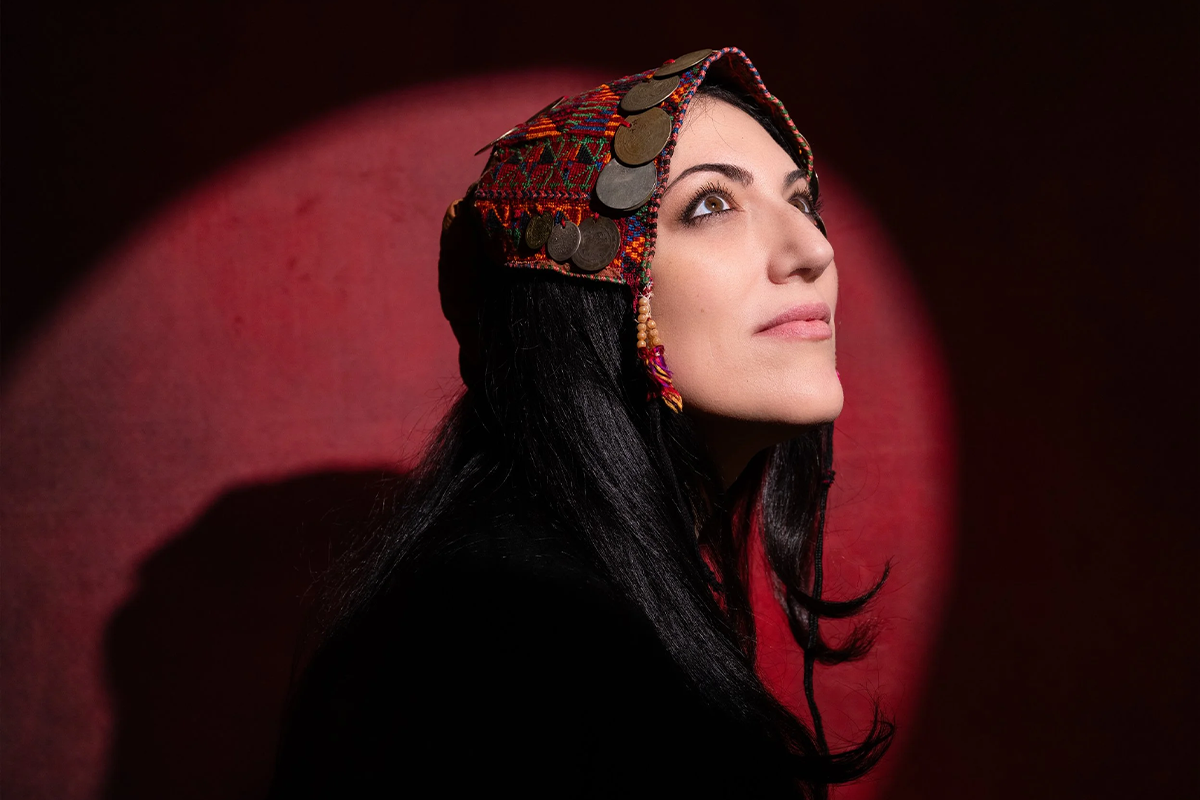
For our first lecturer, Mizna welcomes Wafa Ghnaim, art and dress historian, fashion researcher, embroiderer, educator, and the founder of the Tatreez Institute, specializing in Southwest Asian traditional dress and embroidery.
As the genocide in Gaza approaches its three-year-mark and settler attacks continue to escalate in the Occupied West Bank, the attempts by Israel to erase Palestine extend o epistemicide—the destruction of its knowledge systems and culture. In this context, as cultural preservation becomes ever more critical, Mizna invites Wafa Ghnaim to share her research and scholarship that approaches Palestinian women’s dress and dressmaking both as a form of record keeping and as historical document—inscribed with sociocultural histories and identities passed down through tradition, from mother to daughter, as she learned Palestinian embroidery from her mother, Feryal Abbasi-Ghnaim. Ghnaim’s research into dress history is interdisciplinary in nature, at the nexus of oral history, scientific research, art history, anthropology, and material analysis. Audiences can RSVP to the lecture here.
Mizna and Ghnaim will tailor the lecture to the interests of Mizna’s local community. Audience members may submit a request to learn about the dress styles of particular regions in historic Palestine during the late nineteenth and early twentieth centuries for this presentation. Audiences are invited to participate in the survey through September 15, 2026. Following the lecture, audience members are invited to join a Textile Arts Circle with Ghnaim, a communal space to work on ongoing sewing, knitting, or embroidery projects. Audiences can RSVP for the Textile Arts Circle here.
Support for the Mizna Distinguished Lecture Series is led by Dr. Nora Ali and Mr. Fuad Hannon.

2026 MIZNA DISTINGUISHED LECTURE
Palestinian Dress History: Makers, Meanings, and Motifs
Wafa Ghnaim
October 18, 2026, 1:30pm
Minneapolis Central Library, Second Floor, Pohlad Hall
300 Nicollet Mall, Minneapolis, MN 55401
Until the mid-twentieth century, the dress of the Palestinian people was descriptive of identity; first by societal segment (city dweller, villager, or nomad), and then by the region from which the wearer came. Within each regional style, finer distinctions in women’s dress (thobe) were expressed that conveyed the maker’s life and the natural world around her. Palestinian women recorded their identity in their thobe with embroidery (tatreez) through a shared illustrative language of embroidered patterns, stitching techniques, and thread colors. The thobe records unwritten stories and serves as a visual register of collective and individual identities, documenting a woman’s town, village, or tribe, her marital status, her familial lineage, and the material impact of colonialism, occupation, war, and exile.
Tickets: Ticket proceeds from this event go towards supporting the critical work of Mizna. Please consider donating a minimum of $20; All are welcome, please use promo code FREE at checkout if a free ticket is needed. Tickets available here
Request a Region
Audiences have the opportunity to request the region of Palestine they are most interested in learning about, and Ghnaim will discuss the fundamentals of Palestinian dress history and styles of five of these regions.
To make a request, follow this link. Requests must be submitted by September 15, 2026.
Regions include: Bethlehem Region; Jerusalem Region; Ramallah Region; Yaffa Region; Historic Gaza Region; Lower Coastal Plain, Al Naqab, Bir Saba, and Southern Palestine Bedouin Regions; Galilee Region, including Nazareth, Safad, Acre, and surrounding areas; Central Region, including Jenin, Nablus, Tubas, Tulkarm, and surrounding areas; Al Khalil (Hebron) Region; Jericho and the Dead Sea; Lake Huleh; South Gaza and North Sinai Peninsula Bedouin Regions
RSVP for the Post-Lecture Textile Arts Circle
Following the lecture, Mizna and Wafa Ghnaim will host an hour-long Textile Arts Circle for 40 confirmed guests. RSVPS are required. Bring a sewing, knitting, or embroidery project that you are working on, although it is not required. This is a social gathering and there will be no instruction. Drinks and tastes will be provided.
Audiences can RSVP for the Textile Arts Circle here

ABOUT THE SPEAKER
Wafa Ghnaim is the author of Tatreez & Tea (2016) and THOBNA (2023), with research published by the Metropolitan Museum of Art, the Art Institute of Chicago, and the National Gallery of Singapore. A former instructor at the Smithsonian, research scholar at the Metropolitan Museum of Art, and commissioned designer for Victoria & Albert Museum’s Thread Memory, Wafa continues her preservation work as principal investigator of the Mellon Foundation funded project Bayt wa Balad, a digital cultural atlas documenting object provenance, at the Museum of the Palestinian People. She runs the well-regarded Instagram account, @tatreezandtea.
Related
The Bringers of Violence

Cinema Arabiata, an Arab Film Blog

Pushcart Prize 2017 Nominees
Week Three: Struggle as Language