



February 4, 2026
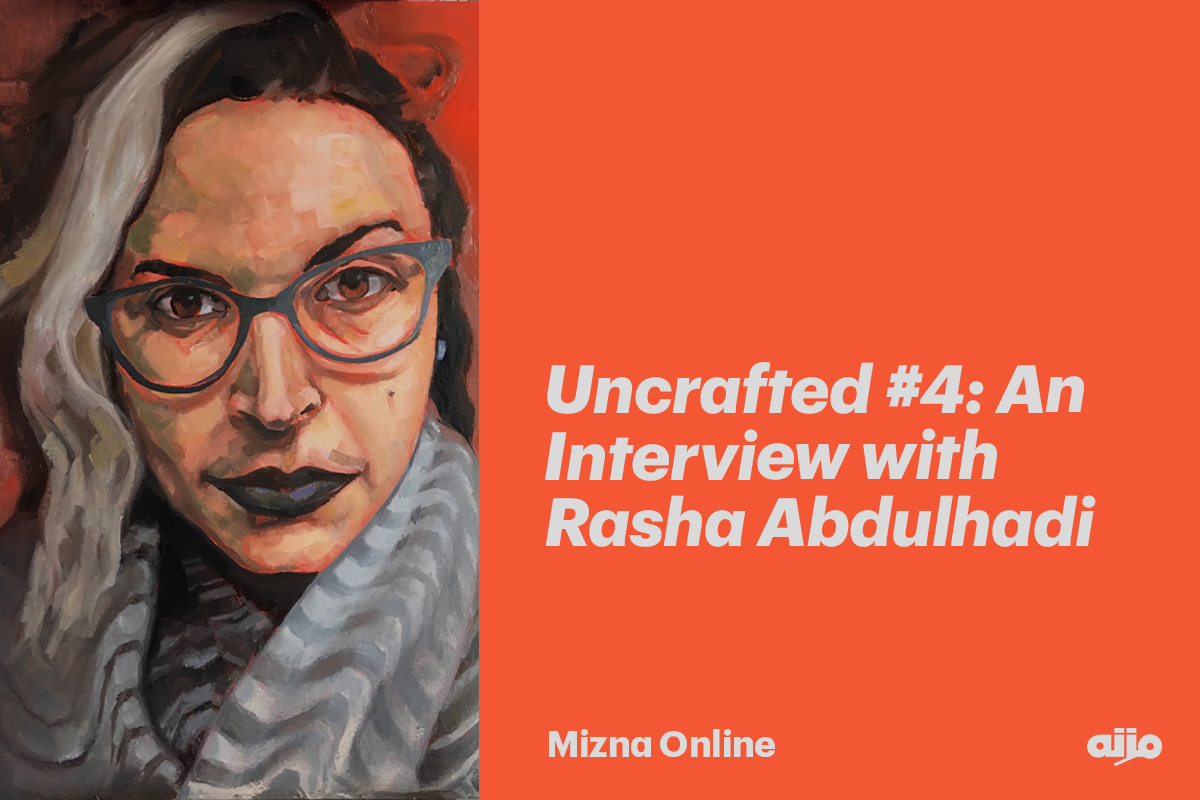
Uncrafted #4: An Interview with Rasha Abdulhadi
The literary terrain is a site of struggle, but never merely representationally. Much as both rightwing and liberal institutions would love to have us believe, the production of literature does not exist outside of the vicious political economy of the United States. It is not enough to point to this or that institution being materially or rhetorically complicit in this country’s various atrocities–though that is certainly an urgent aspect of the struggle–but rather to question: what kind of subject(s) does this institutional literary matrix produce? What are the limits it sets for our horizons? And what work becomes possible when we begin to think outside of its confines? In their work on and off the page, Rasha Abdulhadi teaches us what it looks like for literary craft and practice to look beyond commodification and institutional celebration. It is an important lesson in how to treat the literary circuit as an opening towards a wider road, and not a closed one.
– Hazem Fahmy, Uncrafted Column Editor
HAZEM FAHMY
The piece you shared with me, Sara Ahmed’s essay “Wound Up,” remains highly relevant for movement, academic, and literary spaces, tackling their sordid tendency to enclose the possibility of critique and growth. The branding of a dissenter as a “killjoy” can be nefarious and manipulative, sometimes hard to precisely point out. From your experience, what does this practice look like in literary spaces?
RASHA ABDULHADI
Ah, how far back in my experiences of literary timespace do we want to go? This question is a major part of Ahmed’s point—what stories we tell are very much influenced, even determined, by when we start the story and how narrow or broad a scope we take. Tracing a series of events becomes necessary to understand these moments that get told as stories out of context to preserve the appearance that ‘we’re all nice people here who get along and everything is going great, everything’s all in order!’
I feel careful about the angle I take in approaching this expansive and thoughtful question you offer. You originally invited me to join you for an in-person interview at RAWI 2025 when I was still thinking it would be possible for me to attend in person. Given the sometimes severe energy limitations that come with Long Covid, I wasn’t sure I would be able to participate in the event and then also give focus and language to a conversation. I appreciate you shifting to an asynchronous conversation. I am aware that our conversation now, taking place after RAWI’s gathering that I was not able to attend in person but contributed to via recorded remarks, carries the weight of that context. I feel care not to add additional stress for people who have offered so much care for so many in our communities.
Perhaps it is time to talk publicly about my shadow resume, the wreckings, and some of the moments that preceded what major newspapers and institutional narrators would identify as the start of the story. We could, for example, talk about what no one has said about Guernica magazine’s 2024 genocide apologia and 2025 undead ressurrection. We could talk about the previous boards of Split This Rock, of Kundiman, or the current board of The Poetry Foundation. We could discuss the role of PEN America in projecting US State Department soft power. We might even find time for AWP, Uncanny Magazine, Mason Jar Press, and an editor at Nightboat Books who can’t seem to spell or pronounce the name of Muslim writers, even when honoring them.
Being labeled or treated as a “killjoy” who wrecks the vibes can look like so many things in such timespaces. First of all, you’re likely to be labeled as too sensitive and unstrategic, even if and even as you’re the only person bringing practical solutions and offering unpaid labor or taking on personal risk to implement them. Specific and principled disagreements you take time to carefully address, while offering the most generous attention and respect to people who are trying to actively get you fired and close a whole organization, will be described later to your face as “personal conflicts.” Making calls for change, or simply saying “no” may be received as a personal attack, or even legal or religious judgment. These dynamics are not new; how June Jordan’s insistence on Palestine affected her personal and professional relationships with Audre Lorde and Patricia Smith has painful lessons for us.
Most often, everything but the substance of the boundary-making or calls for care are addressed. We may find ourselves disciplined for bringing things up at the wrong time, in the wrong manner, in the wrong context, or of being the wrong person to say anything at any time or place or manner to begin with! What too often happens, as Ahmed points out, is that the story starts when someone reaches a breaking point and can’t go on with business as usual anymore. Palestinians and many other kindred are all too familiar with how much the story changes depending on when you start the timeline of events in what gets labeled “a conflict.”
HF
Do you have any advice on how younger cultural workers, especially those who may not be in a position to quit such hostile environments, might navigate such forms of coercion and silencing?
RA
I think clarity about where you are and who you are interacting with are the most important practices to start with. I have watched so many folks, dear and far, be disappointed and heartbroken because they mistook coworkers and colleagues for friends and allies. Politeness is not the same thing as genuine and principled care. Being platformed, published, praised, admired, or awarded is also not the same thing as being supported. I would primarily encourage folks—of all ages!—to start with being clear about when they are entering hostile environments and not to break or exhaust themselves arguing with institutions or people who are never going to risk their jobs or platforms—much less their personal safety—to keep other people alive. You’re allowed to research people and institutions before you work with them!
We are all navigating systems of compromise. There is no “outside” in which any of us can yet declare total independence from systems that choreograph the annihilation of our peoples. But if we know where the funding is coming from, what the priorities and limits are, we can sometimes move resources and create safety for others. I would also say: please don’t think you’re the failure if you find you can’t operate in hostile environments—it may be valuable to seek wages outside of cultural work and nonprofit or scholarly timespaces. Sometimes, being paid for work that isn’t our art or organizing can offer more flexibility in how we do the work closest to our hearts and our deepest commitments.
HF
It seems to me that Ahmed’s theorizing of the “killjoy” is particularly relevant to what could otherwise be crudely called “the elephant in the room.” As she puts it, it is “the problem of becoming the problem because you are trying to address a problem that others do not wish to recognize as a problem.” Do you see a relationship between the practice or discourse of “craft” and literary institutions’ refusal to see certain problems as problems?
RA
So much of the fiction, non-fiction, poetry, and literary analysis being published is basically a style guide for everything that no one wants to talk about, including genocide. I am not surprised that many editors and publications have defended the publication of slurs, fascist imagery, handwringing genocide apologia, and other charming literary flourishes whose primary function is to obscure that the writer has nothing to offer or is telling on themselves in ways we should maybe take seriously and pay attention to sooner. This active curation of the limits of polite conversation shows up in both the work that is published and the work done in literary timespaces to cultivate, curate, and platform such work.
It might be important to say that the purpose of this disciplinary curation is to try to prevent the elephant from ever getting in the room to begin with. No one can name what isn’t the room! Or, the elephant that’s outside the room can name themselves as often and as loudly as they want, but no one will be there to witness except the other elephants. Sometimes, as elephants, we might try to get into rooms that we know don’t want to address us and then reveal ourselves. Or, alternatively, disciplinary curation might work by including the elephant in a formal program, even honoring the elephant, and thereby capturing anything the elephant might say as part of the official program. We can’t have a problem with not addressing elephants if we have a token elephant in the room! The elephant can address whatever they want, as long as it’s just words that add to the self-congratulation of everyone in the room that they’ve heard hard truths. The elephant might get patted on the head after and called “so brave.”
Here I am slipping into Ahmed’s manner of speaking, and I want to draw attention to her use of craft, which refuses to take any received language for granted and really gets under the hood of polite phrases and what she calls, in other pieces, a “nonresponsive response”—an answer to a complaint or “problem” that is intended to avoid addressing the problem by seeming as if it is addressing the problem. These are the task forces, town halls, investigations, delayed BDS votes, special issues, exposè reports years or decades later, and other stalling tactics of well-resourced institutions invested in preserving the status quo.
It is common for people to defend a status quo, however harmful or neglectful or inadequate it is, because maintaining “business as usual” feels like it might take less work or require less risk, both to the institution/community and also to everyone’s personal sense that we’re all already good and perfect people who could never cause harm or failure. But we all can cause harm, even with our best intentions and efforts, sometimes especially when we are most convinced of our unimpeachable work. It is common to find groups stuck in dynamics where any criticism is seen as ingratitude and sabotage rather than care and labor toward repair and possibility. I think it’s really worth considering for all of us why we are doing the work we do, and how much of our own egos are tied up in insisting that a certain idea of our self-image is already true, rather than taking a chance of collaboration with others on something that isn’t perfect or fully good yet.
Organizational rules and procedures are craft decisions as much as style guides for publications are. Like style guides, they often express a world of implied values about language, land, lineage, status, and power. Who sets a rule for craft? Who can challenge it or play with it? Who will we never hear from because they are presumed to be outside the terms we set for how we gather and how we publish and judged to be “acceptable losses”—if the loss or absence is even noted at all. Certainly some might be relieved by our absence, but I do find it curious how often the very people who are so angry at us for complaining will ask for more labor from us, will beg us to stay. I have called this “kicking the vending machine,” and have definitely experienced that dynamic in my time as an arts administrator. There is a funny desire to keep the elephant in the room, but quiet or compliant or constantly busy trying to reform and reinvest in the room. Because our absence, our refusals, can be very loud. If we are not present to complain and be called the problem, then people might have to notice things they’ve been ignoring about themselves or the world they’re making.
HF
It seems to me that a lot of these problems have been extenuated by the hyper-institutionalization of artistic and cultural work, which incentivizes the survival and perpetuation of organizations rather than the potential material impact of the craft in question. What does organizing or doing art outside formal artistic organizations look like for you?
RA
Perhaps it’s helpful to take a non-binary approach to formal/informal, stabilizing/transformative, channels for creating, sharing, and engaging with whatever we might call art or culture. There is a spectrum from formal to informal, and work inside institutions can sometimes find moments of informal refuge/refusal, just as work outside institutions can become formal, stable, sustaining practices in community. I am perhaps more interested in the different opportunities offered by each: the opportunity to redirect institutional resources, to heighten contradictions within institutions, to clarify reality to the audiences of (or the “community” around!) institutions.
In working “outside” institutions, I am most attentive to how we resource each other’s aliveness, how the work we do might sustain us in spirit or materially. It’s possible that the cultural work we engage in outside of formal institutions (even just between two people! perhaps even in our personal internal shifts in who we can imagine being, who we can no longer be) is the most consequential work to change what is possible in either current institutions or new formations we might try to make. The value of our long-term relationships should not be underestimated. A piece of art that saves your life or the life of someone you know, or just helps to keep a line of connection open—that is possibly more transformative of history & the present than works of art that are famous in the present or in history. I think it’s valuable to understand what we’re trying to accomplish and with whom, and to find the channels and people for sharing our artistic or cultural work that might actually accomplish those goals.
Culture, as I understand it, is everything around us. Culture shapes our expectations, our imaginaries, our economies, our hospitalities, and certainly our politics. Cultural change precedes other changes, which is why I don’t spend much time arguing with people and am much more interested in the practices we are willing to try and commit to. I don’t really think of anything as being outside of culture. Certainly, there are many cultural timespaces and lineages, and there is definitely at least one culture that offers up “success” as both the most desirable and strategic goal for organizations and individuals. More & better, faster & stronger, wider in reach & longer in duration, covering more ground & owning more timespace!
Perhaps my answer is more abstract or philosophical/existential than the concrete and specific guidance and examples folks might want. But I really believe these deep questions are also practical ones for cultivating a deep internal clarity. I don’t have much advice to offer to those who seek outward reassurances of their success, even within social movements. I suspect many artists don’t allow themselves the permission—or endure the unpleasantness!—to ask what they most hope to accomplish with their work. Knowing what you want from this life and who in the world you care about doing it with or for will clarify whether what you need is an annual gathering or a community zine press or disruptive street theatre or a mutual aid kitchen—or all of the above! Or something that hasn’t yet been done.
The destruction of a weapons manufacturing site, the disruption of the shipping of material support for genocide, can also be understood as artistic and cultural work.
HF
Ahmed argues that a snap, as in an expression of frustration and anger, “is not the starting point but . . . the start of something.” What can that look like for you?
RA
Well, I could say that snapping can be the start of developing what gets called A Reputation. In my life, it has also looked like what Ahmed says at the end: “Being wound up can lead us to others who are wound up.”
I have tried to express to people I collaborate with that offerings of critique and calls for care are most often gifts, in which people take on extra labor and risk in a wager that saying something might lead to something better, to more connection rather than breakage and alienation. I do believe in working toward connection and toward building infrastructure for the lifeworlds/timespaces we long for.
It has been a surprising transition for me to move from being a builder of infrastructure and institutions—someone who spent decades creating and documenting procedures and supporting gatherings and convenings—to being someone who is not only seen and treated as “a problem” or a wrecker, but who now understands that perhaps demolition work is not just an unfortunate side effect but a necessary project if we are to accomplish the transformative changes we claim we want and which might be necessary to keep our peoples alive.
I’ve been grateful to have mentors in my life, including people close to my age but ahead of me in specific experiences, who offered me some grounding frameworks. Before I even agreed to apply for an executive director position at a literary organization, I talked to nearly two dozen people—executive or program directors of other arts orgs, writers and editors, teachers and community organizers I’d worked with. One of the best pieces of advice and clarity I received then was from Carlton Turner, now founding director of Sipp Culture [aka the Mississippi Center for Cultural Production]. When I talked about changes I saw that might need to be made, things I would need to ask for, he guided me to focus on the changes that would also make differences for everyone else I was working with. I don’t know if I can accurately express the subtlety of the profound shift this was, not just in strategy of how I advocated, but really in reordering how I grounded institutional change not in abstract principles but in the material reality of all the people gathered to work together or to participate in the work we offered. To say that we should look out for each other, that we should not always be focused on just how something affects us “personally” (even as the elephant in the room) is perhaps obvious, but what Carlton gifted me was striking clarity about how to practice moving from the moment of complaint or injury to a broader notion of what can be done.
I come from lineages of people who take action, often independent of and completely unsupported by the resources, reputation, or prestige of institutions. I often find that moments of snap, of breakage, can clarify so sharply, so painfully even, what courses of action start to seem possible or even necessary.

Rasha Abdulhadi is calling on you, even as you read this, to join them in refusing and resisting the genocide of the Palestinian people. Whatever sand you can throw on the gears of genocide, whether it’s a handful or a fingernail full, throw it now. Get in the way however you can. The elimination of the Palestinian people is not inevitable. We can refuse it every day, every hour, with our every breath and action. We must.

Hazem Fahmy is a writer and critic from Cairo. A PhD student in Middle Eastern Studies at Columbia University, he is the author of three chapbooks: Red//Jild//Prayer (2017) from Diode Editions, Waiting for Frank Ocean in Cairo (2022) from Half-Mystic Press, and At the Gates (2023) from Akashik Books’ New-Generation African Poets series. He is a Watering Hole Fellow, and his writing has appeared, or is forthcoming in The Boston Review, Prairie Schooner, Mubi Notebook, Reverse Shot, and Mizna.
Related
The Bringers of Violence
Call for Interns: Summer 2022

Library Journal Review of the Mizna Journal


